Get to Know Us
Follow City Slicker Farms via email, Facebook or Twitter.



Donate
Your contribution is 100% tax deductible. You can donate by clicking the button below, or by writing a check payable to "City Slicker Farms" and mailing it to the following address:
City Slicker Farms
1625 16th Street
Oakland, CA 94607

West Oakland’s Leaded Landscape: Making Tough Choices
West Oakland’s Leaded Landscape: Making Tough Choices
By Alison Fischman, Backyard Garden Coordinator
High Lead Found in City-Sourced Eggs, a recently published article by The New York Times, really hit home for us at City Slicker Farms. Here in West Oakland, lead is a major concern, and a major concern for us as urban farmers and our ever-growing network of backyard gardeners.
Surrounded by freeways on all sides, the residual impacts of leaded gasoline – which up until 1996 was legal – are felt deeply in West Oakland. And then there’s lead paint. Even though it was banned back in 1977, it continues to be problematic because many of the historic homes in West Oakland are in need of a paint job – which, unfortunately, is an expense many homeowners cannot afford – causing falling lead-based paint chips to end up in the yards of backyard gardeners. Not to mention the mark a long history of industry has left on the landscape of West Oakland, with many factories leaving behind years of toxic materials, including lead.
So what do we do when we decide to grow food here? Well, we always test the soil before we build a garden. We build raised beds, distancing plants from contaminated soil. We bring in clean soil. We sheet mulch, using layers of cardboard and mulch to create a barrier between us and contaminated soil. We wash our produce in soap and vinegar solutions. We get the word out about gardening and lead. But what about those that want to do more, those that want to take the next step in food self-sufficiency and raise backyard chickens?
The article addresses the difficult decision some of those raising chickens in New York face – risk eating lead-contaminated eggs or rely on an unhealthy industrial food system, which includes chicken farms that are toxic both to the chickens they raise and the surrounding environment. But what about neighborhoods, like West Oakland, that don’t have easy access to fresh, affordable eggs? The unfortunate reality in West Oakland is that not only are there high levels of lead contamination, there are also high levels of food insecurity.
Since there is such little information available about lead in eggs, our general rule of thumb is: if we wouldn’t grow food there, we wouldn’t raise chickens there. But, there may be some people that do it anyway. They may want to take the risk because they see it as their best option for eating fresh eggs, a better way to t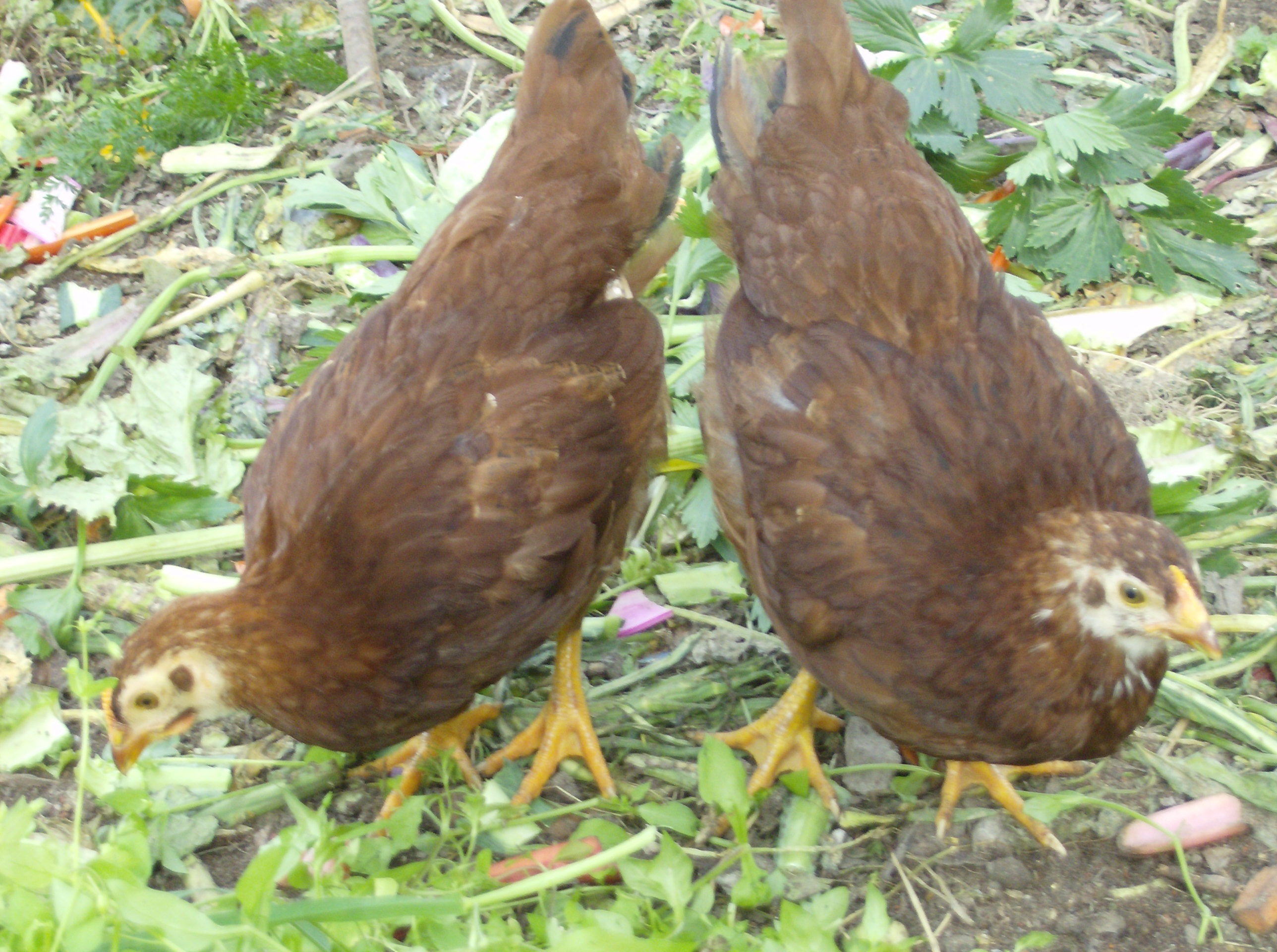 reat chickens, and a positive extension of their backyard garden. Lead poisoning isn’t something to be taken lightly, but neither is food insecurity. As we continue to expand our reach as urban farmers and backyard gardeners, we are faced with barriers and tough choices, especially when healthy food can be so inaccessible. So, we utilize tools to assess the risk, we partner with lead poisoning prevention groups, we gather information by testing the soil so we can make an informed decision, and then we sometimes have to choose between two not-so-perfect options. When we’re trying so desperately to make a change in our community, to take control of our food sources, and to empower ourselves with knowledge and self-sufficiency, there are risks involved. The good news is that the more we expand urban agriculture, the more our understanding of the risks expands, and thus our ability to address those risks improves.
If you have questions about lead contamination in your home and you live in Alameda County, you can contact the Alameda County Lead Poisoning Prevention Program Hotline: Monday – Friday, 8:30 am – 5pm at (510) 567-8280 or toll free at 1-800-B-Lead-Safe (1-800-253-2372) or visit their website: http://www.aclppp.org/index.htm.
If you would like to test your own soil, you can send it to the University of Massachusetts Amherst Soil and Plant Tissue Testing Laboratory. For details visit: http://soiltest.umass.edu/.
To see what the EPA is working on in relation to lead and gardening in West Oakland, check out: http://www.nytimes.com/2011/07/21/science/earth/21fishbones.html?pagewanted=all.
Post new comment